


Search the site

How to Rank in ChatGPT: What Gets a Brand Cited, What Doesn’t, and How to Track It

You typed "best [your category] for [your customer]" into ChatGPT. Three competitors came up. You didn't.
Most advice on fixing that is a list of tips. Add FAQs. Use schema. Write "AI-friendly" content. Some of it helps. None of it is a system.
Here's the uncomfortable truth first: you don't really rank in ChatGPT. You get recommended by the sources ChatGPT trusts. So this guide gives you a repeatable method instead of tips. Audit where you stand, fix what blocks you, earn the mentions that matter, and track it every month.
OpenAI announced in February 2026 that ChatGPT had reached 900 million weekly active users, up from 800 million just four months earlier. A growing share of your buyers are asking it for vendor recommendations before they ever reach your website.
How ChatGPT Picks What to Recommend
ChatGPT builds answers from two places.
Training data. What the model learned from the web before its knowledge cutoff. This is broad, slow to change, and you can't update it directly. If your brand was well covered online before the cutoff, the model "knows" you. If not, it doesn't.
Live search. For questions about products, vendors, recent events or anything "best," ChatGPT often searches the web in real time, reads a handful of pages, and writes an answer with citations. This is where you can move the needle fastest.
That second path is why traditional search still matters so much. ChatGPT's search pulls from a web index, then favors pages and sources that look credible and directly relevant. In my experience, if you're nowhere on page one of Google or Bing for the question, you're rarely in the answer either.
ChatGPT leans hard on community and reference sites. Ahrefs' July 2026 tracking of US queries found Reddit captured 16.7% of ChatGPT's citations among top sources, with Wikipedia second at 8.9%. What people say about you on other sites often matters more than what you say on yours.
Step 1: Run a 20-Prompt Baseline Audit
Before you change anything, measure where you stand. This takes about an hour and it's the most useful hour you'll spend on AI visibility.

Write 20 prompts in four groups of five, using the words your buyers actually use:
- Category: "What are the best [category] for [type of company]?"
- Problem: "How do I fix [problem your product solves]?"
- Comparison: "[Your brand] vs [competitor]: which is better for [use case]?"
- Brand: "What is [your brand] known for?" and "Is [your brand] any good?"
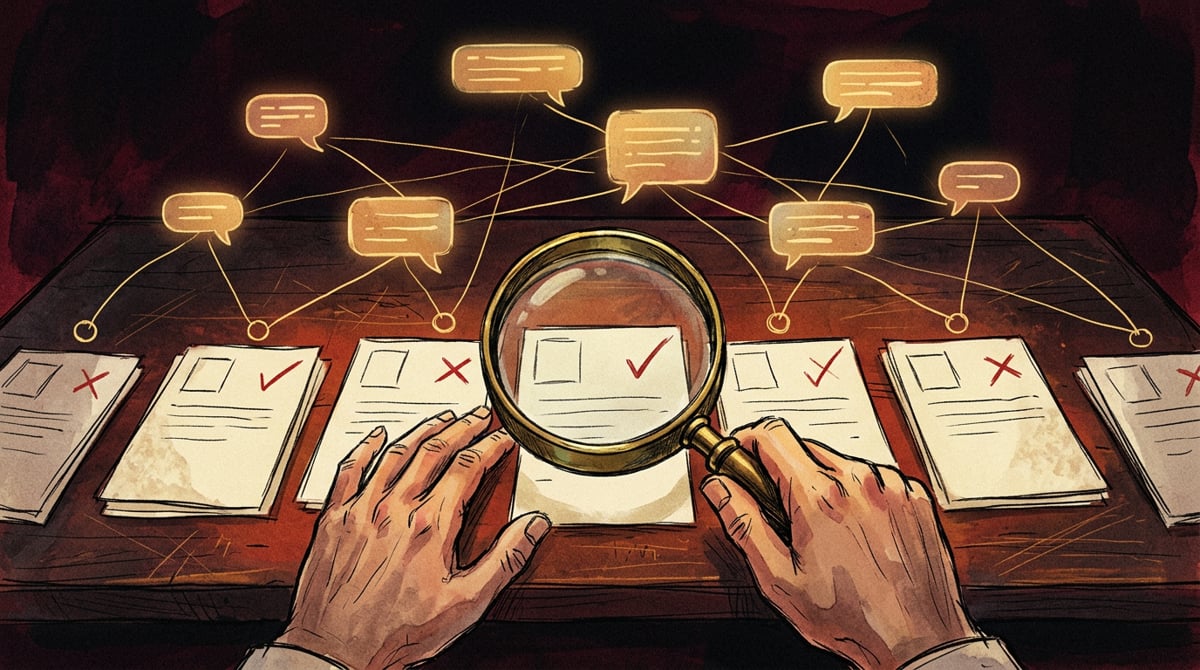
Run each prompt in a logged-out or fresh ChatGPT session. For each one, record: were you mentioned (yes/no), your position in the answer, which competitors appeared, which sources were cited, and whether the description of you was accurate. That spreadsheet is your baseline. Re-run the same 20 prompts every month.
Patterns jump out fast. Usually you'll find the same three or four third-party pages cited over and over. Those pages are your target list for Step 4.
Step 2: Make Sure AI Crawlers Can Reach You
You'd be surprised how many companies block ChatGPT without knowing it. A security plugin, a CDN setting or a copy-pasted robots.txt rule is all it takes.
OpenAI runs separate crawlers for separate jobs. OAI-SearchBot builds the index behind ChatGPT search. GPTBot collects content that may be used for model training. ChatGPT-User fetches pages when a user asks ChatGPT to look something up. Blocking GPTBot doesn't remove you from ChatGPT search. Blocking OAI-SearchBot does.

OpenAI's own crawler documentation states that sites that opt out of OAI-SearchBot will not be shown in ChatGPT search answers, and that robots.txt changes can take about 24 hours to take effect.
To stay visible in ChatGPT search, your robots.txt should allow OAI-SearchBot, for example:
User-agent: OAI-SearchBot
Allow: /
Also check two things people forget. First, make sure your firewall or CDN isn't blocking OpenAI's published IP ranges. Second, confirm your site is indexed in Bing. Submit your sitemap in Bing Webmaster Tools, because many AI search features draw on Bing's index as well as their own.
Step 3: Write Answer-First Pages
When ChatGPT reads your page during a live search, it's hunting for a passage it can lift. Make that easy.
- Lead with the answer. The first one or two sentences under every key heading should answer the heading's question completely on their own.
- Use the buyer's exact question as the heading. "How much does X cost?" beats "Investment Considerations."
- Add specifics. Numbers, price ranges, timelines, named comparisons. Vague pages don't get quoted.
- Build comparison and "best for" pages. These map directly to how people prompt ChatGPT for recommendations.
- Keep it fresh. Update dates, data and examples on your most important pages at least quarterly.
This is the overlap between classic SEO and the newer disciplines. We break down what's genuinely new versus what's just rebranding in AEO vs GEO vs SEO.
Step 4: Earn Third-Party Mentions
This is the step that actually moves results, and the one most companies skip because it's hard.

Listicles
Look at the sources ChatGPT cited in your audit. Most "best X" answers are built from a handful of comparison articles. Get onto those lists. Pitch the authors with something useful: a new product feature, a data point, a customer story. Then publish genuinely useful comparison content of your own that other sites want to reference.
Review sites
G2, Capterra, Trustpilot, Clutch and industry-specific directories are trusted sources for vendor questions. A complete profile with a steady flow of recent reviews is one of the clearest signals you can send.
An SE Ranking study of 129,000 domains found that domains listed on multiple review platforms earned 4.6 to 6.3 ChatGPT citations on average, versus 1.8 for domains absent from them. Review profiles aren't just for buyers anymore.
Reddit is one of ChatGPT's most-cited sources. Don't spam it. Have real people from your team answer real questions in relevant communities, disclose who they work for, and be genuinely helpful. Fake accounts and planted praise get spotted, removed and remembered.
LinkedIn posts and articles from your founders and experts increasingly show up as sources in AI answers, especially for B2B topics. We explain how to approach it in LinkedIn Is Now an LLM Input. Here Is How to Optimize for Both.
Step 5: Make Your Entity Data Consistent Everywhere
ChatGPT assembles a picture of your company from dozens of sources. If they disagree, it guesses.
Pick one canonical description of your company: what you do, who you serve, where you're based, when you were founded and who leads it. Then make it identical on your website's About page, LinkedIn, Crunchbase, G2 and other review profiles, Google Business Profile, directories and press bios. Add Organization schema to your site with links to those official profiles.
Inconsistent entity data is also where AI reputation problems start. An old acquisition, a previous name or a wrong category can stick around in answers for months. If ChatGPT is describing you inaccurately, our guide to reputation management for ChatGPT covers how to approach it.
Step 6: Track It
Your 20-prompt spreadsheet works fine to start. Once you're tracking more prompts or more engines, a tool saves hours. These are grouped by fit, not ranked. For a deeper comparison, see our breakdown of Profound alternatives.
Profound
Best for: Enterprise brands that need deep, multi-engine data- What it does well
- Detailed tracking of brand mentions, citations and sentiment across ChatGPT and other major AI engines, with competitor benchmarking and source analysis.
- Watch-outs
- Priced for larger teams. Smaller companies may pay for more depth than they'll use.
Peec AI
Best for: Marketing teams and agencies that want clean share-of-voice reporting- What it does well
- Tracks a defined prompt set across AI engines and reports visibility, position and sources in a simple dashboard that's easy to share with leadership.
- Watch-outs
- Prompt-based pricing means costs grow as you add prompts, markets and engines.
Otterly.AI
Best for: Small teams starting out on a budget- What it does well
- Affordable monitoring of brand mentions and cited links across ChatGPT, Perplexity and Google's AI features. A low-risk way to automate your baseline audit.
- Watch-outs
- Lighter on analysis than the enterprise tools. Expect to do more interpretation yourself.
Ahrefs Brand Radar
Best for: SEO teams already using Ahrefs- What it does well
- Shows which queries your brand appears for in AI responses, alongside the SEO data you already use, so you can connect rankings and AI visibility in one place.
- Watch-outs
- Best value as part of an existing Ahrefs subscription rather than a standalone purchase.
Semrush AI Visibility Toolkit
Best for: Teams that want AI tracking inside an all-in-one marketing suite- What it does well
- Adds AI visibility and brand mention tracking to the Semrush platform, so SEO, content and AI reporting live together.
- Watch-outs
- Typically an add-on to a Semrush plan. Check what's included at your tier before you commit.
Whatever you use, also watch AI referral traffic in your analytics. Sessions from chatgpt.com are the clearest sign the work is paying off.
What Doesn't Work
- Prompt stuffing. Pages packed with every phrasing of a question read as spam to people and, increasingly, to AI systems.
- Buying mentions. Paid placements on low-quality "best of" sites and planted Reddit praise. They're easy to detect, and when they disappear, so do you.
- llms.txt as a magic fix. It's a reasonable thing to add, but there's little evidence that ChatGPT uses it to decide what to recommend. It's not a substitute for Steps 1 to 6.
- Hidden text and fake "AI instructions" on pages. Trying to tell AI crawlers what to say about you is manipulation, and it can backfire badly.
You don't rank in ChatGPT. You get recommended by the sources ChatGPT trusts. Most of the work happens off your own site: listicles, reviews, Reddit, LinkedIn and press. In my experience, if you're nowhere on page one of Google for the question, you're rarely in the answer either. Shortcuts might win you a month. We explain why they don't last in You Can Still Game AI Visibility. You Just Cannot Keep the Winnings.
If you'd rather hand this to a specialist, our guide to the best GEO agencies in 2026 covers who does it well and what to ask.
FAQ
Can you pay to rank in ChatGPT?
No. There is no paid placement that guarantees your brand appears in ChatGPT's organic answers. ChatGPT recommends brands based on what it learned in training and what it finds in live web search. Paying for mentions on low-quality list sites is risky and often short-lived. The reliable path is earning genuine mentions on trusted sources.
How does ChatGPT decide which brands to recommend?
ChatGPT recommends brands based on patterns in its training data and, for many product and vendor questions, sources it finds through live web search. It favors brands that are consistently and credibly mentioned across trusted sources such as review sites, comparison articles, Reddit discussions, industry media and well-structured company websites.
Does Google ranking affect ChatGPT answers?
Indirectly, yes. ChatGPT search uses web search results to find sources, and pages that rank well in search engines are more likely to be found and cited. Strong rankings in Google and Bing for buyer questions also tend to mean your brand appears on the third-party pages ChatGPT relies on.
How long until ChatGPT mentions my brand?
For questions where ChatGPT uses live search, improvements can appear within a few weeks of new pages or mentions being indexed. Showing up consistently for competitive category questions usually takes three to six months of steady work. Changes to what the model knows from training happen only when new model versions are released.
Does llms.txt help you rank in ChatGPT?
There is little evidence that llms.txt influences which brands ChatGPT recommends. Adding the file is low effort and harmless, but it should not replace the work that matters: allowing OAI-SearchBot to crawl your site, writing answer-first content, keeping company information consistent and earning third-party mentions.
How do I track ChatGPT mentions?
Start with a fixed list of 20 buyer prompts and run them in ChatGPT monthly, recording whether your brand appears, its position, competitors mentioned and sources cited. As you scale, AI visibility tools such as Profound, Peec AI, Otterly.AI, Ahrefs Brand Radar or Semrush can automate tracking. Also monitor referral traffic from chatgpt.com in your analytics.
One Last Thing
Getting cited in ChatGPT isn't a trick. It's a system: measure, unblock, write clearly, earn mentions, keep your facts straight and track it every month. Most of your competitors won't do all six steps. That's your opening.
If you ran the 20-prompt audit and want help reading the results, reach out. That conversation is always free at Aiken House.
Related ...




Subscribe to our insights


