


Search the site

Best AI Visibility Tools in 2026: What They Actually Measure, What They Miss, and How to Pick One

A year ago, almost nobody tracked how their brand showed up in ChatGPT. Now there are dozens of AI visibility tools, each with a dashboard, a score and a confident sales pitch.
Here's my problem with most of them. A score that says you're "visible in 34% of AI answers" doesn't tell you what to do on Monday. The useful tools tell you why you're missing, which sources AI engines trust instead of you, and whether anything you changed actually moved the needle.
We use these tools for our own work and for clients, but we don't sell any of them and don't take affiliate fees. This guide covers what AI visibility tools actually measure, ten options worth knowing, what none of them can measure, and how to pick one for your budget.
ChatGPT alone reached 900 million weekly active users in early 2026. And Gartner predicted that traditional search engine volume would drop 25% by 2026 as people shift to AI chatbots. If your buyers ask AI for recommendations, you need some way to see what it says.
What AI Visibility Tools Actually Measure
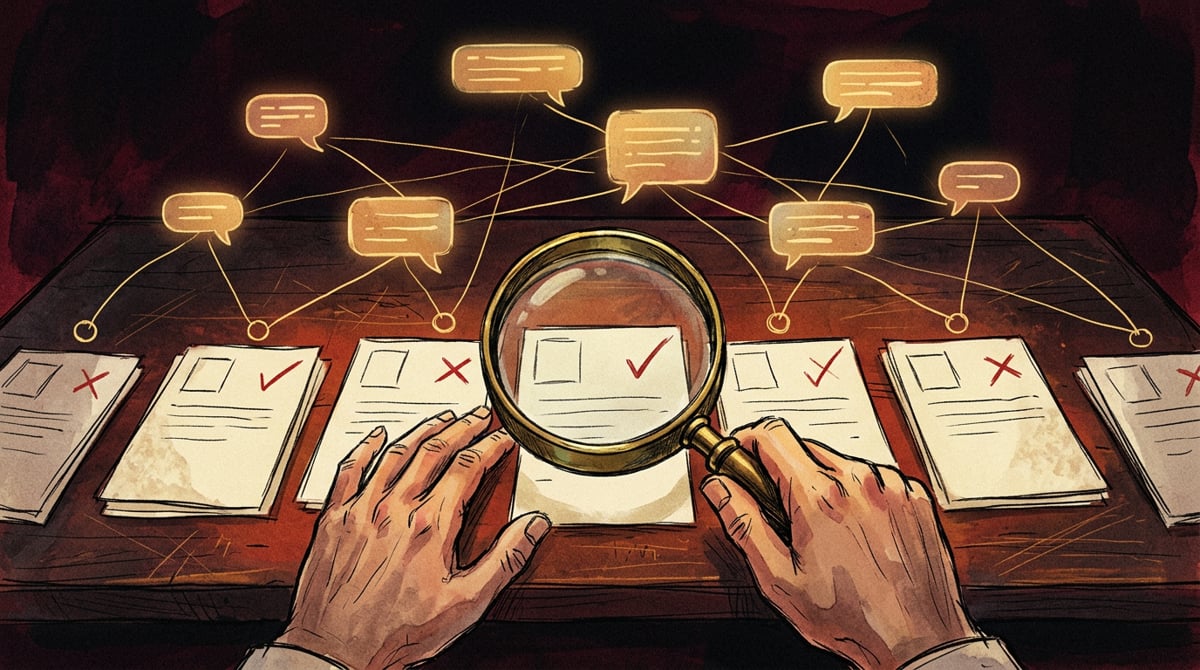
Almost every tool in this category works the same way. You give it a list of prompts, the questions your buyers ask AI engines. It runs those prompts on a schedule across engines like ChatGPT, Perplexity, Gemini, Google AI Overviews and Copilot, then records what comes back.
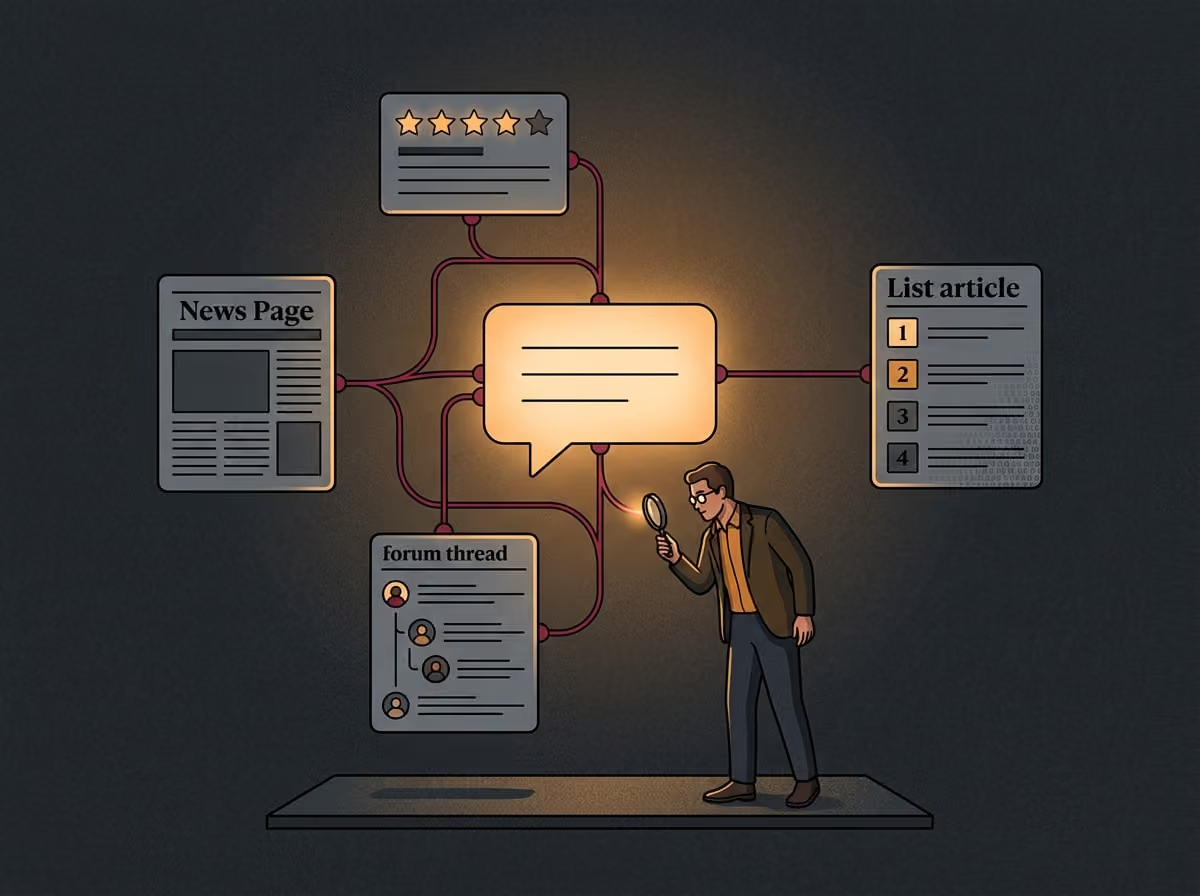
From those answers, the tools calculate a handful of core metrics:
| Metric | What it means | Why it matters |
|---|---|---|
| Mention rate | How often your brand appears in answers to your prompts | Your basic share of AI recommendations |
| Citation rate | How often your website is linked as a source | Shows whether AI trusts your content, not just your name |
| Share of voice | Your mentions compared with competitors on the same prompts | Tells you who's winning the answer |
| Position | Where you appear in a list of recommendations | First mention gets more attention than fifth |
| Sentiment | Whether the answer describes you positively, neutrally or negatively | Catches reputation problems early |
| Source analysis | Which third-party sites the engines cite for your topic | The most useful metric: it tells you where to earn mentions |
If a tool can't show you source analysis, it can tell you that you're losing but not why. That's the line between a monitoring dashboard and a tool that helps you improve.
How to Evaluate These Tools (the Method We Use)
This isn't a lab benchmark. It's the buyer's framework we use when choosing a tool, and you can run it yourself during free trials:

- Write one prompt set. Twenty prompts your real buyers ask: category questions, comparisons, "best for" questions and problem questions. Our guide to how to rank in ChatGPT includes a 20-prompt audit template.
- Run the same prompts in every tool you trial. Same prompts, same competitors, same engines.
- Spot-check by hand. Run five of the prompts yourself in ChatGPT and Perplexity and compare what you see with what each tool reports.
- Judge the "why." Does the tool show which sources were cited, and does it suggest specific actions?
- Price the real workload. Calculate the cost at your actual number of prompts, engines and brands, not the headline plan.
AI answers change from run to run, from user to user and from day to day. Two tools running the same prompt can see different answers. Treat these tools like a weather forecast: watch the trend over weeks, not a single day's number.
The Best AI Visibility Tools in 2026
These are grouped by what they're best at, not ranked against each other. Prices are published entry prices as of 2026 and change often, so confirm on each vendor's pricing page.
Profound
Best for: Enterprise brands that want the deepest data- What it does well
- The category leader for large brands, with broad engine coverage, conversation data and detailed source analysis. Strong on showing which pages and third-party sites drive citations.
- Watch-outs
- Enterprise features and coverage sit in higher tiers, and full deployments get expensive fast.
- Pricing
- Starter from about $99 per month and Growth about $399 per month, with custom Enterprise pricing.
Peec AI
Best for: Marketing teams and agencies tracking several brands- What it does well
- Clean reporting on visibility, position and sentiment across engines, with competitor benchmarking and source data. Popular with agencies because pricing scales by prompts rather than seats.
- Watch-outs
- You choose which AI models to track on lower tiers, and adding more engines raises the cost.
- Pricing
- Published plans from about $95 per month.
Otterly.AI
Best for: Small teams starting on a budget- What it does well
- The easiest and cheapest way to start tracking prompts across ChatGPT, Google AI Overviews, Perplexity and Copilot, with unlimited team members on every plan.
- Watch-outs
- Lighter on optimization guidance than higher-priced platforms. Prompt limits on the entry plan are small.
- Pricing
- Lite $29 per month, Standard $189 and Premium $489, with Enterprise custom.
Scrunch
Best for: Brands that want monitoring plus content fixes- What it does well
- Combines AI visibility monitoring with recommendations for improving how AI engines read and represent your site, with unlimited seats.
- Watch-outs
- Pricing varies by plan and region, so get a quote at your real prompt volume.
- Pricing
- Paid plans with a 7-day free trial; check current pricing.
Ahrefs Brand Radar
Best for: SEO teams already using Ahrefs- What it does well
- Uses a very large database of AI responses rather than only your own prompt list, so you can see brand and competitor mentions across many questions you didn't think to track. Connects naturally with your existing SEO data.
- Watch-outs
- Best value only if you already pay for Ahrefs. Less tailored to your exact buyer prompts.
- Pricing
- Add-on to Ahrefs plans; check current pricing.
Semrush AI Visibility Toolkit
Best for: Teams that live in Semrush- What it does well
- Brings AI visibility, prompt tracking and brand mentions into the same workspace as your keyword and site data. Easy to report alongside classic SEO metrics.
- Watch-outs
- Custom prompt allowances are modest on the base plan, and pricing is per domain.
- Pricing
- About $99 per month per domain as an add-on, or bundled in higher Semrush packages.
AthenaHQ
Best for: Mid-market teams that want to tie visibility to revenue- What it does well
- Tracks visibility across major engines and focuses on connecting AI presence to traffic and conversions, with action recommendations.
- Watch-outs
- Credit-based pricing means your bill moves with how many responses you track.
- Pricing
- A free Essential tier with limited credits; Starter about $295 per month.
Goodie
Best for: Teams that want prioritized optimization tasks- What it does well
- Goes beyond monitoring with a task queue of specific optimizations, which helps teams that don't have an in-house GEO strategist.
- Watch-outs
- A newer platform, so check reporting depth and support before committing.
- Pricing
- Reported entry plans start around $199 per month; confirm current pricing.
Rankscale
Best for: The lowest cost per tracked answer- What it does well
- Credit-based tracking that's among the cheapest ways to monitor a lot of prompts across several engines. Good for testing the category before a bigger commitment.
- Watch-outs
- Smaller company with lighter analysis than the enterprise platforms.
- Pricing
- Essentials from about $17 per month billed yearly; Pro about $99 per month.
Writesonic GEO
Best for: Content teams that want tracking and writing in one place- What it does well
- Pairs AI visibility tracking with Writesonic's content tools, so teams can spot a gap and draft content to address it in the same platform.
- Watch-outs
- Content generation is the core product; visibility analysis may be lighter than specialist tools.
- Pricing
- Included in Writesonic plans; check current pricing.
Comparison Table
| Tool | Best for | Source analysis | Action recommendations | Entry price (2026) |
|---|---|---|---|---|
| Profound | Enterprise brands | Deep | Yes | About $99/mo; Enterprise custom |
| Peec AI | Agencies, multi-brand teams | Yes | Some | About $95/mo |
| Otterly.AI | Small budgets | Basic | Light | $29/mo |
| Scrunch | Monitoring plus fixes | Yes | Yes | Check pricing |
| Ahrefs Brand Radar | Ahrefs users | Yes | Light | Ahrefs add-on |
| Semrush AI Toolkit | Semrush users | Yes | Some | About $99/mo per domain |
| AthenaHQ | Revenue-focused mid-market | Yes | Yes | Free tier; about $295/mo |
| Goodie | Task-driven optimization | Yes | Yes | About $199/mo (reported) |
| Rankscale | Lowest cost per answer | Basic | Light | About $17/mo (yearly) |
| Writesonic GEO | Content teams | Some | Content-led | Writesonic plans |
For the stack we actually run, and how these tools fit together, see Profound Alternatives: The Aiken House AI Visibility Stack. If you're also comparing content platforms, our guide to AirOps alternatives covers that side.
Example Prompts to Track
Your prompt set matters more than your tool. Mix these types:
| Prompt type | Example | What it tells you |
|---|---|---|
| Category | "What are the best [category] companies for mid-size businesses?" | Whether you're in the consideration set |
| Comparison | "[Your brand] vs [competitor]: which is better for [use case]?" | How AI frames you against rivals |
| Problem | "How do I fix [problem your product solves]?" | Whether you show up before buyers know your category |
| Brand | "Is [your brand] good? What do customers say?" | Sentiment and the sources behind it |
| Local or niche | "Best [service] in [city] for [industry]" | Visibility in high-intent, specific searches |
Questions to Ask Before You Buy
- Which engines do you track, and how often does each run?
- Do you show the exact sources each answer cited?
- How do you handle answer variation between runs?
- What does it cost at my real number of prompts, engines and brands?
- Can I export raw data, or am I locked into your dashboard?
- Do you give specific recommendations, or just scores?
Turning the Data Into Action: A 30-Day Plan
- Week 1: Build your prompt set and run a baseline in your chosen tool.
- Week 2: List the top 10 sources AI engines cite for your category. Note which ones mention competitors but not you.
- Week 3: Fix your own pages first: clear answers, comparison content, updated facts and structured data.
- Week 4: Start earning mentions on the cited sources through reviews, PR, partnerships and community participation.
Then measure again monthly. The tool's job is to show whether those efforts are working.
What AI Visibility Tools Can't Measure
Every tool on this list has the same blind spots. Know them before you trust the dashboard.

- Real user conversations. Tools run their own prompts. They can't see what your actual buyers typed, or how a long, personalized conversation unfolded.
- Personalization and memory. ChatGPT answers can change based on a user's history, location and settings. Tools see a generic version.
- Revenue impact. Most tools can't prove that a higher visibility score led to more pipeline. You still need analytics, self-reported attribution and sales conversations.
- Clicks you never get. AI answers often satisfy the question without a click, so traffic data understates your influence.
- Why a source is trusted. Tools show which sites get cited, but not the editorial or ranking logic behind the choice.
Pew Research found that Google users clicked a traditional result in 8% of visits when an AI summary appeared, compared with 15% without one. Ahrefs found AI Overviews reduce clicks to the top-ranking page by about 58%. Traffic alone no longer tells you how visible you are.
Most AI visibility scores are vanity metrics in a lab coat. A number going from 31% to 36% feels like progress, but it doesn't tell you what to do next. Buy the tool that tells you why you're missing: which sources the engines trust, which competitors they name, and which pages you need to fix or earn.
How to Pick a Tool by Budget
| Monthly budget | Good options | What you get |
|---|---|---|
| Under $50 | Otterly.AI Lite, Rankscale Essentials, free tiers | Basic tracking for a small prompt set; enough to learn the category |
| $50 to $300 | Peec AI, Semrush AI Toolkit, Profound Starter, Rankscale Pro, AthenaHQ Starter | Regular tracking across several engines with competitor data |
| $300 to $1,000 | Profound Growth, Otterly Premium, higher Peec AI tiers, Scrunch, Goodie | More prompts, more engines, source analysis and recommendations |
| $1,000+ | Profound Enterprise and other custom plans | Multiple brands, deep data, dedicated support |
If you already pay for Ahrefs or Semrush, start with their AI features before buying another tool. You may find the add-on covers 80% of what you need.
Who Should Own AI Visibility
The tool is the easy part. Someone has to own the results. In most companies that's the head of SEO or content, because AI visibility depends on the same assets: clear pages, strong content, earned mentions and technical health. In companies where reputation is the bigger concern, PR or communications often takes the lead.
Whoever owns it should report a simple monthly view: mention rate and share of voice on your core prompts, the top sources AI engines cite, what changed, and what you'll do next.
Common Mistakes When Buying an AI Visibility Tool
- Tracking vanity prompts. Prompts with your brand name in them will always look good. Track the questions buyers ask before they know you.
- Too few prompts. Five prompts can't show a trend. Twenty to fifty is a better starting point.
- Buying for features you won't use. If no one will act on the recommendations, you're paying for an expensive report.
- Ignoring the sources tab. The list of cited sources is usually more valuable than the visibility score.
- Judging week to week. AI answers are noisy. Look at monthly trends.
- Expecting the tool to fix anything. It measures. Your content, PR and reviews do the work.
Free and DIY Options
You don't need a tool to get started. A simple spreadsheet works:
- List 20 buyer prompts.
- Run each one monthly in ChatGPT, Perplexity, Gemini and Google AI Mode.
- Record whether you're mentioned, your position, the competitors named and the sources cited.
- Track the trend over three months.
It takes about two hours a month and gives you a real baseline. Once the manual work becomes painful, you'll know exactly which features to pay for. For context on how AI visibility fits with classic search, see AEO vs GEO vs SEO.
Tools Don't Do the Work
An AI visibility tool shows you the gap. Closing it still takes content, digital PR, reviews, and earned mentions on the sources AI engines trust. If you'd rather hand that work to a specialist, our list of the best GEO agencies compares firms that do it.
FAQ
What is an AI visibility tool?
An AI visibility tool tracks how often and how favorably your brand appears in answers from AI engines like ChatGPT, Perplexity, Gemini and Google AI Overviews. It runs a set of buyer prompts on a schedule and reports metrics such as mention rate, citation rate, share of voice against competitors, sentiment and the sources those engines cite.
What are the best AI visibility tools in 2026?
Strong options include Profound for enterprise brands, Peec AI for agencies and multi-brand teams, Otterly.AI for small budgets, Semrush AI Visibility Toolkit and Ahrefs Brand Radar for teams already using those SEO platforms, AthenaHQ for revenue-focused mid-market teams, and Rankscale for low-cost tracking. The best choice depends on budget, engines needed and whether you want action recommendations.
How much do AI visibility tools cost?
Published entry prices in 2026 range from about $17 to $29 per month for basic plans like Rankscale Essentials and Otterly.AI Lite, to roughly $95 to $400 per month for mid-tier plans from Peec AI, Profound, Semrush and AthenaHQ. Enterprise plans are custom-priced and often run into the thousands per month.
Can AI visibility tools track ChatGPT?
Yes. Most AI visibility tools track ChatGPT along with other engines such as Perplexity, Gemini, Google AI Overviews and Copilot. They run your chosen prompts and record the answers. However, they see generic responses rather than personalized conversations from real users, so results are best used as trends rather than exact counts.
What is the difference between AI visibility tools and SEO tools?
SEO tools track rankings, keywords and backlinks in traditional search results. AI visibility tools track whether and how your brand is mentioned or cited in AI-generated answers. Many teams use both, because strong SEO still feeds AI visibility, and some SEO platforms like Semrush and Ahrefs now include AI visibility features.
Can I track AI visibility for free?
Yes. You can build a manual tracker by running about 20 buyer prompts each month in ChatGPT, Perplexity, Gemini and Google AI Mode, then recording mentions, positions, competitors and cited sources in a spreadsheet. Some tools also offer free tiers or trials, which are useful for testing before paying.
One Last Thing
AI visibility tools are worth having, but only if they change what you do. Start with a clear prompt set, pick the cheapest tool that shows you why you're missing, and spend the rest of your budget on the content and mentions that actually move the answers.
If you want help building a prompt set or choosing a tool, reach out. That conversation is always free at Aiken House.
Related ...





Subscribe to our insights


