


Search the site

W-2 Form Checklist: What to Verify in 2 Minutes
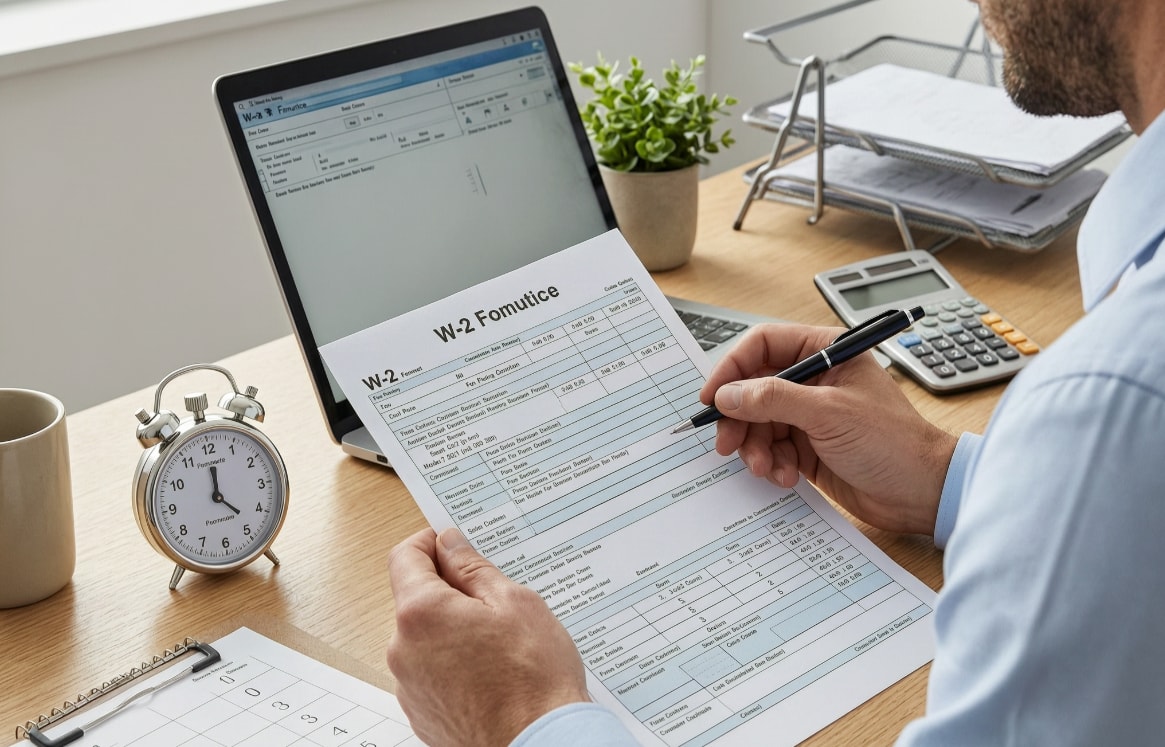
The W-2 form is one of the most important documents you’ll receive every year as an employee. It details your earnings and the amount of tax withheld from your paycheck. While it’s critical for tax filing, a simple 2-minute check can ensure that the information on your W-2 form is accurate and complete. This quick verification can prevent surprises when it’s time to file your taxes and avoid delays or mistakes in your tax return.
What a W-2 Is (and Why a 2-Minute Check Matters)
The W-2 form is issued by your employer each year to summarize your total income and the taxes withheld for federal, state, and local purposes. It serves as a vital record for filing your taxes and determining how much you owe or the refund you’ll receive.
Mistakes on your W-2 can result in issues when filing your taxes, such as underreporting your income or over-claiming tax withholding. By taking just a few minutes to verify key details, you can quickly identify any discrepancies and ensure that the W-2 form you’ve received is accurate.
Your 2-Minute W-2 Form Checklist (What to Verify)
Here’s a quick checklist for what you should verify on your W-2 form in just a couple of minutes:
Verify Personal Info
Start by checking your personal information to make sure that the details are correct.
- Name: Ensure your name matches what your employer has on file. Any misspelling could cause issues during filing.
- Social Security Number (SSN): A mismatched SSN could delay your refund or cause complications when reporting earnings.
- Address: Make sure your address is up-to-date in case any mail, like tax documents, is sent to your home.
These are basic yet crucial details. Any mistake here should be corrected immediately by reaching out to your HR department.
Verify Employer Info
Next, check your employer's information. This includes the name of the company, its Employer Identification Number (EIN), and the company address.
- Employer Name: This should be consistent with the name you’re familiar with.
- EIN: This is a nine-digit number used to identify your employer for tax purposes.
- Employer Address: Confirm that the address matches what you know about the company’s location.
Verify Pay and Withholding Boxes
Now, check the wages and the amount of tax withheld. These are typically the largest sections on your W-2, so it’s essential to ensure they reflect your actual earnings.
- Box 1 (Wages, tips, and other compensation): This box shows your total taxable income for the year. Ensure the number matches what you expected.
- Boxes 2-4 (Federal, State, and Local Taxes Withheld): Verify the federal, state, and local taxes withheld, as these will determine if you owe money or are due a refund.
Mistakes here may lead to issues when filing your tax return, especially if too much or too little tax was withheld.
Verify Benefits and Deductions
Your W-2 will also list any benefits or deductions that were taken from your paycheck during the year. These can include:
- Retirement Contributions (Box 12, Code D): If you contributed to a retirement account such as a 401(k), this will appear here.
- Healthcare Contributions: If you had healthcare premiums deducted, they should also be listed, especially if you have employer-sponsored insurance.
- HSA/FSA Contributions: If you contributed to a Health Savings Account (HSA) or Flexible Spending Account (FSA), check that those amounts are reported correctly.
These deductions may not directly affect your W-2 income, but they could impact your tax filing.
Verify State/Local Details
If you work in multiple states or a city that imposes its own taxes, it’s important to review the state and local tax information on your W-2.
- State and Local Withholding: Verify that the amounts for state and local tax withholding (Boxes 17 and 19) are correct, especially if you moved during the year or worked in multiple states. This ensures you won’t overpay or underpay state taxes.
If you see discrepancies with state or local taxes, it’s crucial to get in touch with your employer immediately.
Verify Special Codes and Boxes
Some W-2 forms will contain special codes or additional boxes that may be relevant to your situation, such as:
- Box 12: This section often contains codes for various tax benefits, such as retirement contributions or the Affordable Care Act.
- Box 13 (Retirement Plan): If you’re part of a retirement plan, this box should be checked. It’s important for determining if you qualify for certain tax credits.
Cross-Check Against Your Final Paystub
Before calling your employer about discrepancies, quickly compare your W-2 form with your final paystub of the year.
- Match the totals: The wages listed on your W-2 should closely match the wages on your final paystub.
- Verify tax withholdings: The total federal, state, and local tax withheld on your W-2 should align with the amounts on your paystubs.
Red Flags That Mean You Need a Correction
If you spot any red flags on your W-2, you’ll need to request a corrected version (Form W-2c) from your employer. Red flags may include:
- Incorrect SSN or name: A mismatch between your personal information and the information on the W-2 can lead to tax filing issues.
- Incorrect tax amounts: If the federal, state, or local tax withholdings don’t match your paystubs or expected withholding, ask for a corrected W-2.
If any of these issues arise, don’t hesitate to reach out to your HR department for a corrected W-2.
What to Do If You Filled Out the W-4 Wrong
If you notice that your W-4 was filled out incorrectly and it’s affecting your withholding, make sure to update it with your employer. You can submit a new W-4 form anytime to adjust the withholding amounts, so they match your current financial situation.
Final Thoughts
By taking just a couple of minutes to review your W-2 form and comparing it against your paystubs, you can ensure that your tax information is accurate and avoid surprises when it’s time to file your tax return.
If you spot any discrepancies, take immediate action to have them corrected. A quick check of your W-2 form can save you time, money, and stress during tax season.
Related ...




Subscribe to our insights


