


Search the site

Online Reputation Management Monitoring Tools That Actually Work in 2026
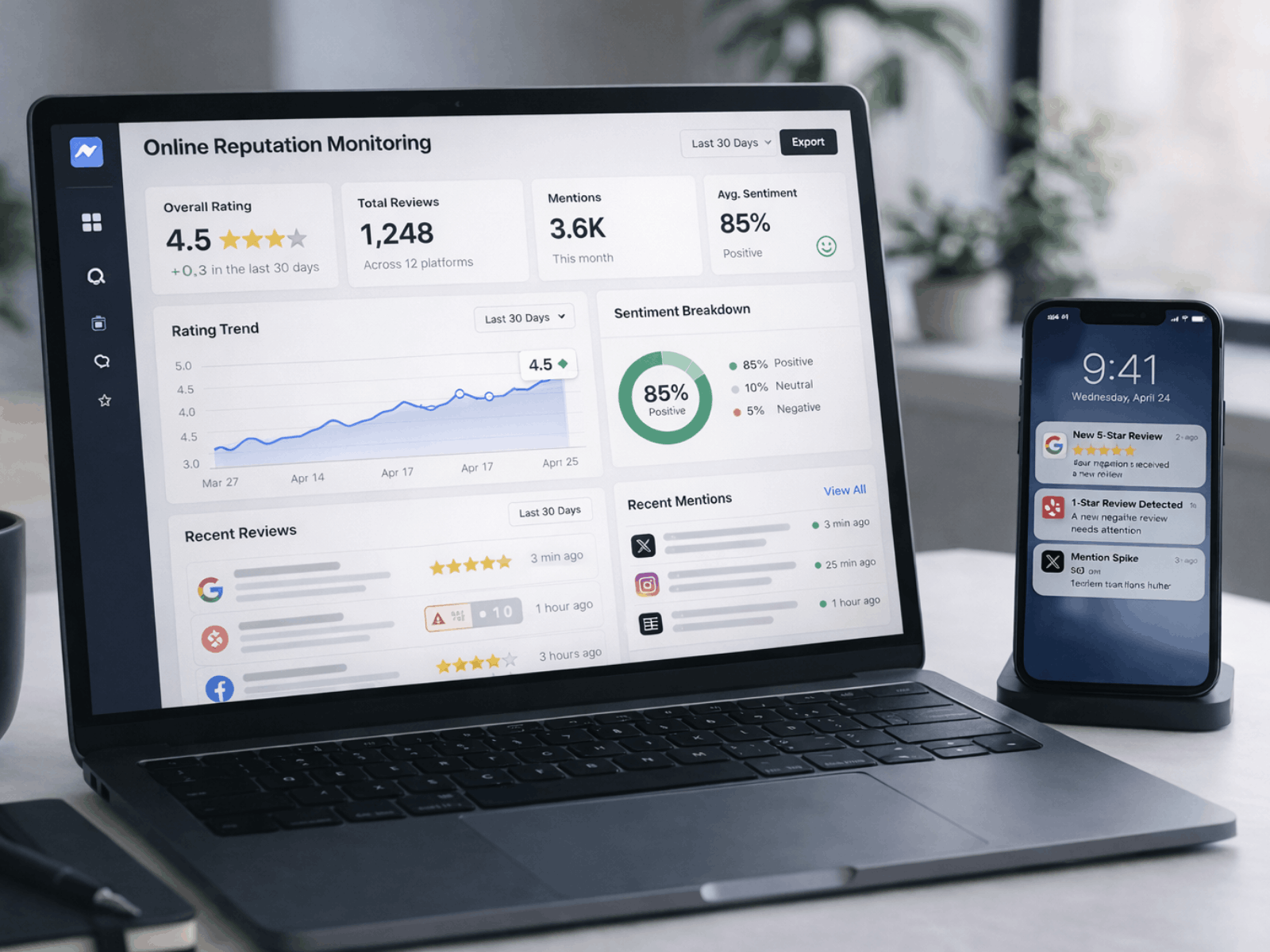
Your brand is being talked about right now. On review platforms, social media channels, forums, and increasingly in AI-generated search summaries that surface before anyone clicks through to your website. The question is not if those conversations are happening. It is whether you are seeing them in time to do something about it.
Online reputation management monitoring tools exist to close that gap. Not as a reactive measure after damage is done, but as an always-on system that gives your team the visibility needed to respond early, protect your brand's credibility, and stay ahead of narratives before they take hold.
In 2026, the brands with the strongest reputations are not the ones with the cleanest records. They are the ones with the best visibility. Below is a breakdown of the tools that actually deliver on that promise, what to look for before you commit, and how to avoid the mistakes that make even the best tools ineffective.
What Is Online Reputation Management and Why Monitoring Is the Foundation
Online reputation management is the ongoing process of tracking, influencing, and improving how your brand appears across every digital touchpoint. It covers what people see when they search for you, what surfaces in AI-generated summaries, what gets said in reviews and forums, and how all of that shapes the first impression a prospect forms before ever interacting with your brand directly.
According to research, 93% of consumers say online reviews influence their purchasing decisions. That number reflects something broader than just reviews. It reflects how much weight people place on publicly available information when deciding whether to trust a brand.
Monitoring is the foundation of effective ORM because you cannot manage what you cannot see. Without real-time visibility into what is being said about your brand and where, every other reputation management effort is reactive by definition.
Here is what monitoring actually covers:
- Review platforms: What customers are saying on Google, Trustpilot, Yelp, and niche platforms, and how quickly your team is responding.
- Social media channels: Mentions, tags, comments, and conversations happening across LinkedIn, X, Instagram, Reddit, and TikTok.
- Forums and communities: Discussions on Reddit, Quora, and niche platforms that often rank in branded search results and stay visible for years.
- News and press coverage: Articles, features, and third party mentions that shape how your brand is perceived beyond your owned channels.
- AI generated summaries: How tools like ChatGPT, Perplexity, and Google AI Overview are describing your brand to users who may never visit your website.
The right monitoring tools give you visibility across all of these channels simultaneously. That visibility is what turns reputation management from a reactive cleanup exercise into a proactive brand asset.
1. Brand24

If your brand is being talked about, Brand24 will catch it. It scans social media, news sites, blogs, and forums in real time so your team sees conversations as they happen, not after they have already spread. For teams that want visibility without digging through multiple platforms, it keeps everything in one place and makes it easy to act on.
What Brand24 does best:
- Real-time mention tracking: Continuously monitors the web for brand mentions, helping you spot spikes in conversation volume and respond before they escalate.
- Sentiment analysis that is easy to read: Breaks down mentions into positive, negative, and neutral, giving a quick snapshot of how people feel without overcomplicating the data.
- Multi-channel coverage: Pulls data from social media, blogs, forums, and news sites, making it easier to track conversations beyond just reviews.
One notable limitation: Strong for tracking and alerts but does not offer robust tools for managing or responding to reviews directly. Teams focused heavily on review responses may need a separate platform alongside it.
2. ReviewTrackers

Reviews scattered across Google, Yelp, and Facebook tell you a lot about your brand. ReviewTrackers pulls all of that feedback into one place so your team can see patterns, respond faster, and actually act on what customers are saying. Instead of treating reviews as isolated comments, it helps teams turn them into actionable insights.
What ReviewTrackers does best:
- Centralized review monitoring: Pulls reviews from multiple platforms into a single dashboard so you are not checking each site manually.
- Fast, streamlined responses: Built-in response tools make it easier to reply to reviews quickly, which helps maintain trust and show consistency.
- Customer feedback insights: Highlights trends in reviews, helping you identify recurring issues or strengths across locations or services.
One notable limitation: Highly focused on review platforms, so it offers limited visibility into broader brand mentions like social media conversations or forum discussions.
3. Mention

Most monitoring tools show you one slice of the conversation. Mention shows you the whole picture, combining social listening, media monitoring, and competitor tracking into a single platform so nothing gets missed. It is especially useful for teams that need to follow conversations as they happen across multiple channels simultaneously.
What Mention does best:
- Real-time alerts across multiple sources: Tracks brand mentions across social media, blogs, forums, and news sites, sending alerts as soon as conversations happen so nothing slips through.
- AI powered sentiment analysis: Analyzes whether mentions are positive, negative, or neutral, helping teams quickly understand public perception and prioritize responses.
- Competitor tracking and benchmarking: Allows you to monitor competitors alongside your own brand, making it easier to spot gaps, trends, and opportunities in your space.
One notable limitation: Powerful but comes with a learning curve. The volume of data and features can feel overwhelming at first, especially for smaller teams that just need simple monitoring.
4. Birdeye

Monitoring alone does not grow a reputation. Birdeye connects reviews, messaging, and customer experience into one system so your team can act on feedback quickly and turn everyday interactions into measurable reputation growth. For local and service-based brands especially, that combination makes a meaningful difference.
What Birdeye does best:
- Automated review generation and responses: Helps businesses request reviews at the right time and respond efficiently, keeping engagement consistent without adding manual work.
- Customer experience insights: Analyzes feedback trends across locations or services, helping teams spot recurring issues and improve overall experience.
- Strong integrations with business tools: Connects with CRMs and other platforms, making it easier to align reputation management with daily operations.
One notable limitation: The wide range of features can feel excessive for smaller teams that only need simple monitoring without automation or customer experience tools.
5. Yext
Reputation is not just about what people say. It is also about whether the information they find about you is accurate. Yext focuses on consistency across search, directories, and local listings so your brand shows up correctly everywhere it matters. For companies with multiple locations or high search visibility, that consistency plays a direct role in trust.
What Yext does best:
- Listings and search presence management: Keeps your business information consistent across directories, maps, and search platforms, reducing confusion and improving visibility.
- Strong local SEO support: Maintaining accurate listings helps improve how your brand shows up in local search results.
- Scalable for multi-location brands: Especially useful for businesses managing multiple locations that need consistent information across all listings.
One notable limitation: More focused on listings and search visibility than deep social listening, so it may not capture broader conversations happening across social media or forums.
6. Brandwatch

Tracking mentions is one thing. Understanding the behavior behind them is another. Brandwatch pulls data from across the web and turns it into insights about trends, audiences, and sentiment shifts at a scale most tools cannot match. For enterprise teams that need to understand not just what people are saying but why, it goes deeper than any other platform on this list.
What Brandwatch does best:
- Advanced audience insights: Analyzes who is talking about your brand, including demographics, interests, and behavior patterns, which helps refine targeting and messaging.
- Custom dashboards and reporting: Allows teams to build tailored dashboards, making it easier to focus on the metrics that matter most.
- Trend detection and predictive insights: Helps identify emerging trends early, giving brands a chance to respond before conversations peak.
One notable limitation: Data-heavy and best suited for larger teams. Smaller businesses may find it more complex than necessary for basic monitoring needs.
7. Sprout Social

Seeing a mention and being able to respond to it should not require two different tools. Sprout Social combines social listening with publishing and engagement so your team can monitor and act from the same place. For brands that are active on social, it turns monitoring into something practical and usable day to day.
What Sprout Social does best:
- Unified inbox for engagement: Messages, comments, and mentions are centralized, making it easier to manage conversations without missing anything.
- Strong analytics and reporting: Provides clear reports on engagement, sentiment, and trends, helping teams understand what is working and what needs attention.
- Team collaboration features: Makes it easy to assign messages, manage responses, and stay aligned across teams.
One notable limitation: Heavily focused on social media, so it offers less coverage for reviews, forums, and broader web mentions compared to full reputation monitoring platforms.
8. Hootsuite

For teams managing both content and conversations, constantly switching platforms is a time drain. Hootsuite combines scheduling, engagement, and basic monitoring into one dashboard so nothing falls through while your team stays focused on publishing. It is a practical starting point for brands that want to keep social activity and basic reputation monitoring in the same place.
What Hootsuite does best:
- Stream-based monitoring: Custom streams let you follow brand mentions, hashtags, or specific keywords in real time.
- Multi-platform management: Supports major social networks, allowing teams to monitor and manage conversations across channels in one place.
- Team collaboration tools: Makes it easy to assign messages, manage responses, and keep communication organized across team members.
One notable limitation: Monitoring features are more basic compared to dedicated reputation tools, especially when it comes to sentiment analysis and tracking conversations beyond social media.
Quick Comparison: Online Reputation Management Monitoring Tools 2026
Common Mistakes That Hurt Your Reputation (Even With Tools)
According to research, 94% of people say they have avoided a business because of negative information they found online. Most brands do not lose trust overnight. It happens in small moments that get ignored, delayed, or mishandled. The best online reputation management monitoring tools can only surface issues. What happens next is entirely on your team.
Here is where things usually go wrong:
Ignoring Negative Reviews
A bad review isn’t the problem. No response is. Ignoring online reviews or negative feedback on key review sites hurts brand reputation and brand credibility. People judge how you manage customer reviews, not just the feedback itself. A quick, thoughtful reply supports a positive online presence and shows strong customer communication.
Responding Too Late
Speed matters more than perfection. Delayed responses allow customer conversations to grow and impact your current brand reputation across social media platforms and review channels. Strong reputation management tools with real-time alerts help protect customer satisfaction and maintain online visibility.
Over-Automating Responses
Templates help. Robotic replies hurt. Overusing automation like automated review requests or generic replies weakens trust. People expect real responses, not scripts. Personal replies improve customer interactions, support customer loyalty, and strengthen your brand online.
Not Tracking Sentiment Trends
One comment doesn’t mean much. Patterns do. You need to analyze customer sentiment, track review performance, and monitor reputation trends, not just individual mentions. Good online reputation management software helps teams analyze reviews, manage review volume, and protect long-term business growth.
Small mistakes compound fast. Catch them early, respond with intent, and your reputation becomes something you actively build, not something you constantly fix.
How to Choose the Right Tool (Without Wasting Budget)
More than half of consumers expect a rating of at least 4 out of 5 stars before considering a business. Most tools promise everything. Most teams use only a fraction of it. The goal isn’t to get the most features. It’s to get the right visibility without overpaying for things you won’t use.
1. Start With Your Risk Level
Think about how fast things can go wrong for your brand. If you’re active on social, running campaigns, or getting steady traffic, feedback spreads quickly. You’ll need real-time monitoring across multiple channels. If you’re a smaller or local business, your reputation usually lives in reviews. In that case, a review-focused tool is often enough. More visibility means less room for delay.
2. Define What You Need to Monitor
Not everything matters equally. If people decide based on reviews, prioritize review tracking. If your brand gets talked about on social or forums, focus on mentions and conversations. Trying to monitor everything can overwhelm you. Focus on what actually influences trust and decisions.
3. Prioritize Speed Over Features
Speed is what makes these tools valuable. If you find out about an issue hours later, the damage is already done. Real-time alerts matter more than polished dashboards or extra reports. The faster you see it, the more control you have.
4. Look for Integration With Your Stack
A tool only works if your team actually uses it. Look for something that connects with your CRM, support system, or marketing tools. That way, responding becomes part of your workflow instead of an extra step. If it feels separate, it usually gets ignored.
The right tool should feel less like another platform to manage and more like a natural extension of how your team already works, giving you clarity and control without adding complexity.
Monitoring Is Just the Start
The tools covered above exist to make sure that does not happen to your brand. Each one serves a different need. But the tool is only half of it. Brands that win at online reputation monitoring are the ones that actually act on what they see. Responding fast, collecting new customer reviews consistently, tracking sentiment trends over time, and managing business listings across every platform where their brand shows up.
Reputation is not something you fix after the fact. It is something you build every day in the small moments most brands are not paying attention to.
If you want help building a monitoring strategy that actually works for your brand, Aikenhouse works with companies on exactly this. Let's talk strategy.
Related ...





Subscribe to our insights


