


Search the site

Does Your LinkedIn Profile Affect Your Google Search Results?
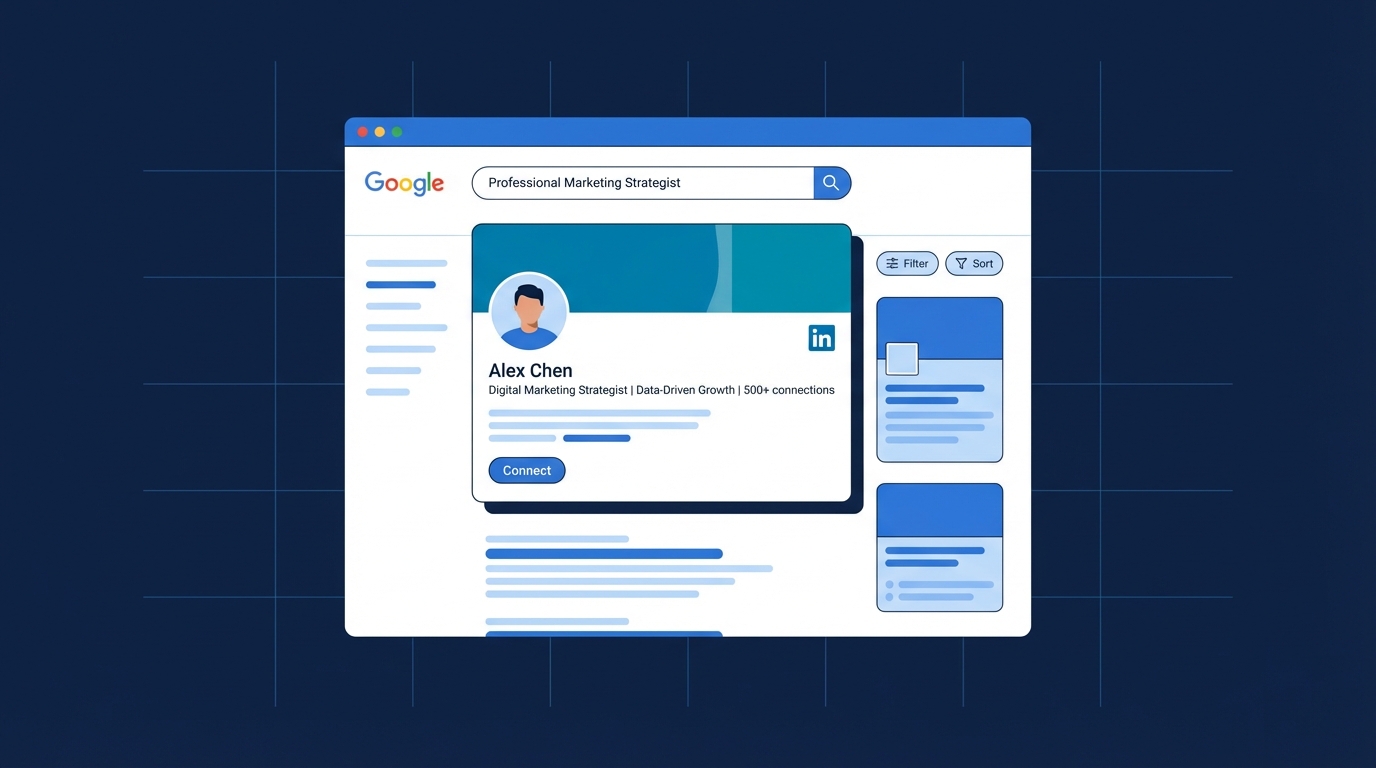
Go ahead and Google yourself right now. Open a new tab and do it.
If you have a public LinkedIn profile, there's a very good chance it's sitting in the top three results for your name. Maybe number one. And if it's sparse, outdated, or shows a job you left three years ago, that's what investors, clients, hiring managers, and journalists are seeing before you've said a single word to them.
Most people treat LinkedIn like a resume they update when they're job hunting. Big mistake. Your LinkedIn profile is quietly working as a reputation signal in Google every single day, whether you're paying attention to it or not.
Here's exactly what's happening, why it matters, and what you can actually do about it.
Why LinkedIn Ranks So Well on Google
Google treats your LinkedIn profile like any other public webpage. If your visibility settings are on, Google crawls it, indexes it, and serves it when someone searches your name.
Why does it tend to land so high in results? LinkedIn has the kind of domain authority that personal websites take years to build. It's one of the most linked-to, most visited, most frequently updated professional platforms on the internet, and Google knows it. When someone searches your name, a well-maintained LinkedIn profile from a domain Google already trusts is usually an easy call for a top result.
One analysis of 100 lawyers found that 83% of the time, their LinkedIn profile showed up in the top five Google results for their name. Lawyers aren't special here. The same plays out for executives, consultants, founders, and anyone with a professional presence online.
So what does Google actually show from your profile? Your name, your headline, your current title, and usually the first line or two of your About section. That's it. Which means your headline is doing a wildly disproportionate amount of work before anyone even clicks.
The Reputation Problem Most People Don't See Coming
Here's the scenario that actually hurts people. You Google yourself, your LinkedIn profile shows up first, and it looks okay at a glance. But someone clicks through and finds:
A profile photo from a different decade. A headline listing a role you left in 2021. An About section with two vague sentences that could describe literally anyone. Zero activity. No recommendations.
That's not a neutral result. That's a negative one. It signals you're either out of touch or not paying attention, and neither impression is one you want someone forming before you've ever spoken.
95% of recruiters use LinkedIn when vetting candidates, and many cross-check what they find internally with what Google surfaces. An inconsistency between the two creates doubt that's hard to walk back. And it's not just recruiters. Over 90% of consumers say a brand's online reputation directly influences their decisions, and people are brands now too.
Activity Matters More Than You Think
Here's the part most people miss. It's not just about having a profile. It's about whether it's alive.
Google ranks pages partly on freshness. A LinkedIn profile that hasn't been touched in two years is going to rank less reliably than one that gets updated and has people clicking through to it. LinkedIn itself confirms that staying active helps search engines index and rank your profile higher.
A few things that specifically move the needle on Google ranking:
Regular updates, even minor ones. A new skill, a tweaked headline, a published post. Activity tells both LinkedIn and Google that your profile is current.
More connections and more profile views signal to LinkedIn's algorithm that your profile is worth surfacing, which ripples into how prominently it shows up in external search.
A complete profile. LinkedIn has an internal benchmark they call "All-Star" status, and profiles that hit it — photo, custom URL, About section, full work history, skills — consistently outperform sparse ones in both LinkedIn and Google search.
Your custom URL showing up elsewhere. Every time your LinkedIn URL appears on your website, in your email signature, or in an article you wrote, that's a small backlink signal telling Google your profile is worth ranking higher.
Your LinkedIn Profile is an SEO Document
This framing changes how you write it. The words you use in your headline, your About section, your job titles, and your skills directly influence what searches your profile shows up for.
"Marketing consultant" in your headline is fine. But if you want to rank when someone Googles "B2B SaaS marketing consultant" or adds your city, you need those words in your profile. That's not gaming anything. That's just how search works.
The About section is the most overlooked piece. Most people write it like a conference bio: third-person, vague, forgettable. But the first two or three sentences are what Google pulls into the search snippet. Write those like you're answering "who is this person and why should I care" for someone who knows nothing about you. Specific beats generic every time.
LinkedIn as an ORM Tool
This is where it gets interesting. LinkedIn isn't just a place to park your work history. It's some of the most powerful and controllable real estate you have on page one of Google for your own name.
If there's content about you online that you don't love — an old article, an unflattering mention, a result from a company you left years ago — a strong, active LinkedIn profile is one of the most reliable ways to push that result down. It occupies a higher position just by existing and being well-maintained.
This is exactly why the best reputation management companies for executives almost always start with LinkedIn as part of a broader SEO strategy. It's free, it's fast to set up, and Google already trusts it. That's a rare combination.
For a broader look at how LinkedIn fits into managing your overall presence, the best practices for personal reputation management are worth reading alongside this.
Why Your Profile Might Not Be Showing Up at All
Search your name and no LinkedIn? A few culprits.
The most common one: your public visibility is off. LinkedIn has a setting that controls whether Google can crawl your profile. It's under Settings and Privacy, then Visibility, then Edit your public profile. If the toggle is off, you're invisible to Google entirely.
Your name is too common and more prominent people with the same name are owning the results. The fix here involves building more external signals that tie your name to your specific context — your city, your industry, your company.
Your profile is too sparse. Three connections, no photo, one job from a decade ago. Google isn't going to prioritize that over other results.
No external links pointing to your LinkedIn URL. Without signals from outside LinkedIn, Google has less reason to rank your profile over other content.
The Five Things to Fix Today
Turn on public profile visibility if it's off. Settings and Privacy, Visibility, Edit your public profile.
Customize your URL to linkedin.com/in/yourname or as close as you can get. Takes 30 seconds, makes your profile look more credible in search results.
Rewrite your headline. Don't just list your title. Include what you do, for whom, and a keyword or two that matches what someone searching for a person like you would actually type.
Fix your About section opening. First two to three sentences are what Google shows. Make them specific, clear, and human, not a bio for a conference lanyard.
Put your LinkedIn URL on your website, email signature, and anywhere else you have a presence online. Each one is a small but real signal to Google that your profile is worth ranking.
None of this is complicated. It's just the kind of thing that's easy to defer until someone important has already Googled you and made up their mind.
If you want help thinking through how LinkedIn fits into your broader online reputation picture, we work through exactly that with clients.
Related: 2026's Best Online Reputation Management Companies for Executives | Best AI Tools for Reputation Management to Protect Your Brand
Related ...






Subscribe to our insights


